You have a massive backlog of audiobooks. Between the dense business books your boss wants you to read and the fantasy epics sitting in your Audible library, there simply isn't enough time to listen at normal speed.
So, you naturally start bumping up the playback multiplier. First to 1.25x, then to 1.5x, and possibly even pushing past the 2x mark.
But flying through a book quickly doesn't matter if you can't actually remember what happened. The tension between burning through your reading list and keeping your comprehension intact is very real.
So, what exactly is the best audiobook playback speed? The truth is, there isn't one magical, universal number.
The optimal listener speed changes drastically based on the narrator, your personal listening experience, and the genre itself. Let's take a deep dive into the fascinating neuroscience of auditory processing.
We'll break down exactly what happens to your brain at 1.5x, 2x, and 3x speeds. Finally, we'll show you how to actively train your brain to listen significantly faster without losing the plot.
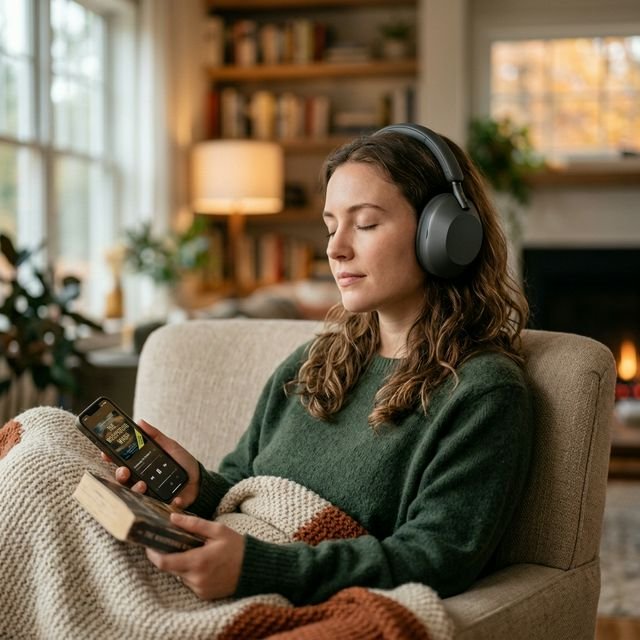
The Neuroscience of Listening: Why We Can Speed Up Audio
To understand why you can comfortably listen to a recorded book at 1.5x speed, we first have to understand neurology. We need to look at how our brains actively process human speech.
Humans are biologically hardwired for spoken language. While visual reading is a relatively recent invention in human evolutionary history, our auditory processing centers have been evolving for hundreds of thousands of years.
Because of this ancient evolution, your auditory cortex is staggeringly efficient. It can decode phonemes, process complex syntax, and recognize emotional tones instantly.
In fact, it derives highly complex meaning from spoken words much faster than the average human mouth can physically move. The physical mechanics of moving our tongue, lips, and breath constantly force us to speak slowly.
But your inner brain is entirely unconstrained by those physical roadblocks. When you listen to a traditional audiobook at normal speed, your brain is actually severely under-stimulated.
It has massive amounts of excess processing capacity just sitting idle. This lack of stimulation is exactly why your mind tends to wander and daydream if a narrator is speaking too calmly.
When you increase the playback speed inside the app, you instantly fix this problem. You are effectively closing the gap between the physical limitations of the human mouth and the immense processing power of the human brain.
Modern apps make this possible by utilizing a brilliant software technology called "time-stretching." In the old days of cassette tapes, playing audio faster drastically increased the pitch, resulting in a ridiculous "chipmunk" sound.
Today, complex digital algorithms perfectly preserve the exact original pitch and tone of the narrator's voice. The software mathematically removes the microscopic, imperceptible pauses between syllables and words.
This incredible processing allows the audiobook recording to sound completely natural and grounded. It just sounds remarkably like someone speaking at an accelerated, superhuman rate.
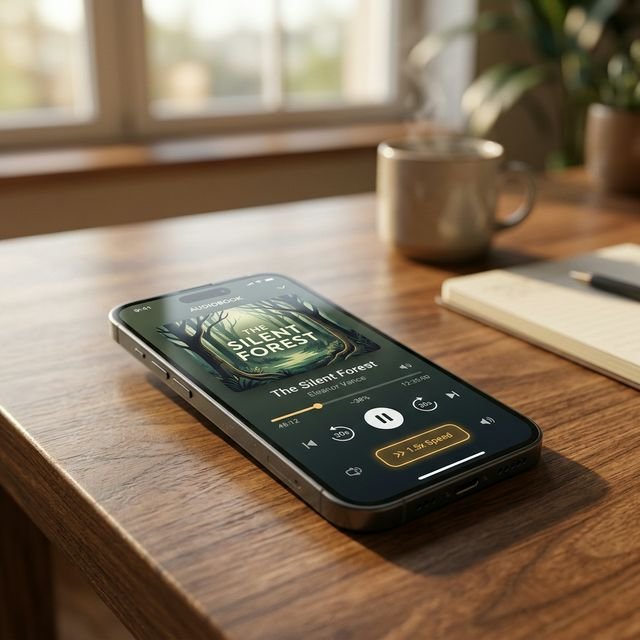
What the Research Says: Breaking Down Playback Speeds
When you artificially speed up a digital audiobook, you are undeniably asking your brain to work slightly harder. However, you do not instantly lose your ability to understand a plot line just because the audio moves faster.
Scientific studies consistently prove that human comprehension behaves on a sloping, forgiving curve rather than a sudden sheer cliff. Let's look closely at what the academic science says regarding the four major speed benchmarks.
Listening at 1x (Normal Speed): 150 Words Per Minute
The average, professionally produced audiobook narrator speaks at a very consistent rate. They typically hit roughly 150 to 160 words per minute (WPM), which is a highly relaxing and comfortable pace.
It is specifically designed by studio producers to mimic the speed of a normal, casual conversation between two friends. If you are diving blind into a highly complex, emotionally devastating work of literary fiction, 1x speed is exactly where you want to safely be.
However, for many experienced daily listeners, 1x speed actually severely hurts plot comprehension. Because the brain rapidly processes information much faster than 150 WPM, that idle cognitive capacity inherently leads to chronic daydreaming.
You might suddenly realize that your favorite narrator has been safely speaking for five minutes, but you haven't processed a single word. Because you were distractedly planning dinner, you completely missed the murder plot.
Listening at 1.5x Speed: 225 Words Per Minute
Make absolutely no mistake: this is the true "Goldilocks Zone" for most experienced audiobook fans. At exactly 1.5x speed, the elite narrator is delivering the text at a remarkably brisk 225 to 240 WPM.
Multiple independent peer-reviewed studies centered specifically on time-compressed human speech point to the exact same conclusion. Comprehension at 1.5x is nearly identical to listening at 1x for standard narrative prose.
You comfortably retain the intricate, vital details of the overall plot, and you clearly understand the main character motivations without feeling rushed. More importantly, hitting the 1.5x speed multiplier forcefully dictates that your brain must pay total, undivided attention.
Because the audio is moving briskly, you no longer have the excess cognitive capacity available to casually daydream about your grocery list. This forces your focus to instantly sharpen.
Quite ironically, thousands of avid listeners report that their overall, long-term comprehension genuinely improves at this exact, brisk multiplier.
Listening at 2x Speed: 300 Words Per Minute
When you courageously push your app's multiplier to exactly 2x speed, you enter deeply fascinating scientific territory. The narrator is furiously blazing through the thick text at a blinding 300 WPM.
Researchers from UCLA famously conducted a brilliantly simple study on the physical reality of time-compressed audio lectures. They had college students actively listen to standardized educational material at varying speeds and then immediately administered strict comprehension quizzes.
The initial results completely shocked the pedagogical classroom world. Students who listened at the blistering 2x speed scored just as remarkably well on the immediate quizzes as those who relaxed at 1x speed.
But there is a profoundly critical catch to this finding. The researchers diligently brought those exact same students back into the lab a full week later to take a surprise "delayed recall" test.
The students who confidently listened at the 2x speed suffered terrible, plummeting scores on the delayed memory test. Their overloaded brains could successfully hold the raw information in short-term memory immediately after listening, but long-term retention failed.
The brutally high 2x speed completely prevented the brain from executing proper memory consolidation for the long term. This means listening at furious 2x speeds is perfectly fine for highly fluffy fiction or disposable daily news podcasts.
But if you are actively listening to a dense, historical non-fiction book for a brutal college exam, don't do it. Relying on 2x speed in those stressful situations will seriously and permanently hurt your long-term memory retention.
Listening at 3x Speed: 450+ Words Per Minute
At an astounding 3x speed limit, the audio track is flying by at an absolutely ridiculous 450 to 480 WPM. At this completely absurd point, you are pushing very hard directly against the physical, biological comprehension ceiling.
Researchers worldwide universally agree that the concrete biological threshold for casual auditory comprehension inevitably collapses around 275 to 300 WPM. This is a very hard limit for normally sighted, casually trained individuals.
At true 3x speed, the digital audio algorithms simply cannot successfully preserve the natural, microscopic pauses between complex phonemes and sentences. Sharp vowels immediately blend wildly into soft consonants, turning entire emotional paragraphs into a chaotic blur of mechanical noise.
Decoding audio data at this excessive speed violently demands immense, physically exhausting cognitive strain. Native screen-reader users magically train their brain's auditory cortex to effortlessly handle incredibly extreme speech speeds natively from childhood.
But for the rest of us, listening to a fun audiobook at 3x speed is a massive mistake. It will likely permanently destroy your comprehension completely.

Optimal Speed Ranges by Specific Audiobook Genre
Not all published books are created completely equal. The innate, structural complexity of the text plays an absolutely massive, undeniable role in exactly how fast your unique brain can process it.
It decides exactly how fast your unique brain can process the incoming, nonstop audio stream safely. Here is a highly detailed, comprehensive breakdown of the optimal, perfectly research-backed speeds for popular genres.
Literary and Emotional Fiction (1.0x to 1.25x)
You might be quietly listening to a beautifully written, Pulitzer-prize winning novel where the lyrical prose matters just as much as the actual plot. In these beautiful books, you actively want to linger on the devastating emotional narrative beats.
You want to quietly soak in the dramatic pauses and fully appreciate the voice actor's incredibly specific vocal inflections. Aggressively speeding this beautiful performance up ruthlessly ruins the artistic, emotional impact that the original author intended.
Dense Non-Fiction and Educational Theory (1.0x to 1.25x)
What if your chosen book heavily involves abstract philosophy, advanced mechanical science, or complex medieval history? If so, you absolutely must slow down your player.
Your working memory's finite capacity immediately becomes the primary, unavoidable biological bottleneck. You simply cannot rapidly absorb and heavily analyze a dense, multi-layered philosophical argument if the author is screaming it at 250 WPM.
You have to give your organic brain the physical, literal time it requires. It needs that extra breathing room to slowly mull over the incredibly complex, vast historical theories.
Modern Thrillers and Pulp Mysteries (1.5x to 1.75x)
These insanely popular thriller books are completely, wonderfully plot-driven. They heavily utilize highly modern, incredibly punchy, very conversational dialogue between distinct characters.
The fundamental, grammatical sentence structures are usually relatively simple and easily digestible. Because of this, your brain can easily, joyfully absorb the bloody narrative without suddenly tripping over complex descriptive prose.
This makes psychological thrillers the absolute best genre for aggressively pushing your speed up. You can easily coast at a very comfortable 1.5x or even an exciting 1.75x.
Business Strategies, Self-Help, and Memoirs (1.5x to 2.0x)
Corporate business frameworks and daily self-help advice books are highly, intentionally repetitive by their very core design. The intelligent authors constantly use familiar, relatable personal anecdotes over and over again to drive a point home.
Because you are likely already somewhat inherently familiar with the general psychological concepts being broadly discussed, your brain can functionally speed-read the auditory data without missing a beat.
Additionally, many popular modern memoirs are read strictly by the original authors themselves in a highly casual, friendly, podcast-like tone. This makes them extremely, effortlessly easy to speed up without awkwardly sounding like a distorted robot machine.
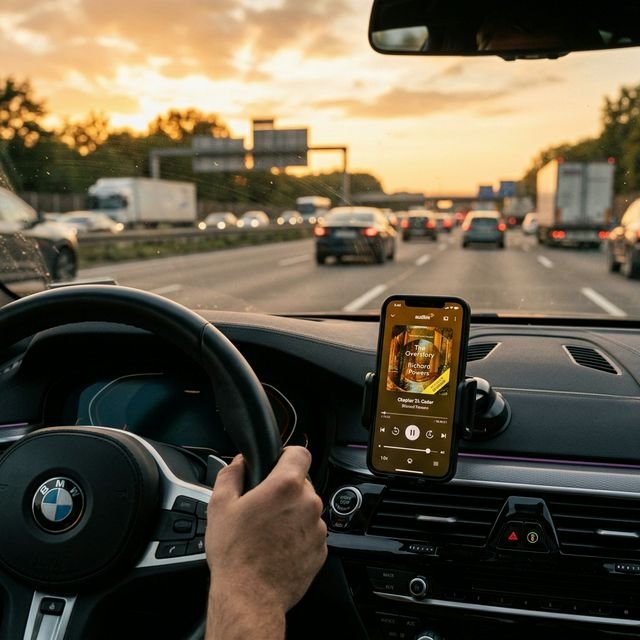
The Unavoidable Role of Environmental Distractions
Your chosen playback speed absolutely does not exist isolated in a perfect, sterile silent vacuum. Where you are currently physically situated matters deeply, and what your physical body is actively doing dictates your absolute maximum comprehension ceiling.
Maybe you relax safely on a soft couch in a perfectly quiet, dark room with your eyes happily closed. In this relaxing scenario, your brain naturally devotes 100% of its available cognitive processing power entirely to the fast auditory input.
Under those perfectly idealized conditions, pushing the playback multiplier safely all the way up to a blazing 2.0x is remarkably easy. Your brain quite literally only has one single, solitary auditory task to completely solve.
But how many of us actually ever listen to ten-hour audiobooks in a perfectly silent, totally dark, completely isolated room? Virtually almost nobody does that.
Active Chores VS Passive Chores
The massive, overwhelming majority of avid everyday audiobook fans listen while actively driving their cars to work or furiously washing their dirty dinner dishes. Every single one of these physical, demanding environmental tasks heavily taxes your brain's available "cognitive load."
Imagine you quickly commute down a very busy, surprisingly crowded morning highway. A truly massive chunk of your working memory's bandwidth is actively, necessarily dedicated to analyzing the constantly shifting surrounding traffic.
You are safely monitoring your current vehicle speed and diligently checking your blind spots to avoid accidents. Because your environment urgently requires constant, active survival problem-solving, your brain suffers.
It simply cannot allocate enough raw neurological processing power to properly comprehend a thick philosophical audiobook running at a blazing 1.75x speed. In these highly demanding mobile environments, you absolutely must turn the playback speed dial way down.
Conversely, passively engaging in deeply ingrained, repetitious muscle-memory chores is fundamentally different. Mindlessly folding basic cotton laundry safely requires almost absolute zero active, complex cognitive thought.
Because folding cotton shirts repeatedly does not seriously tax your brain's precious working memory, you are totally free. You can safely ramp your audiobook back up to an exciting 1.5x speed while doing mundane chores and suffer absolutely zero loss of plot comprehension.

Actionable Tips for Safely Training Your Brain to Listen Faster
You simply can't force your Audible app open, wildly crank a dry history book immediately up to 2x speed, and stubbornly expect to understand absolutely anything. As we clearly highlighted earlier, speed listening is incredibly similar to running a marathon.
It is a highly, systematically trainable human athletic skill. Your physical, organic auditory processing system needs extended neurological calendar time to biologically adapt to the insanely fast flow of rushed phonemes.
If you desperately want to furiously read more new books without sacrificing your much-needed retention, follow our advice. Here is an exact, highly proven medical protocol on exactly how to do speed listening efficiently and effectively.
1. The Easy 1.25x Acclimation Phase
Absolutely do not violently jump straight to 1.5x on day one of your training. For the absolute entire first week, simply bump the digital speed dial gently up by a tiny, imperceptible fraction to just 1.25x.
When you press play, it might sound slightly unnatural for about thirty panicked seconds at first. But within exactly five or maybe ten short reading minutes, your remarkably elastic brain will easily adapt to the slightly bouncy audio rhythm.
Before you know it, 1.25x will magically start to feel completely, undeniably, 100% perfectly normal to your ears.
2. Rely Heavily on Deep Familiarity
Your squishy brain routinely processes familiar structural narrative patterns significantly faster than completely novel ones. If you want to aggressively try the intimidating 1.75x or the legendary 2.0x, always test those extreme speeds exclusively on material you already intimately know.
Listening to a massive blockbuster book like Harry Potter that you have already joyfully read twice in physical paperback format is the absolute undisputed easiest method. It is the most stress-free way to train your terrified brain to smoothly handle 2x speeds without an ounce of pure panic.
3. Willingly Drop the Speed for Hard, New Concepts
A massive Olympic weightlifter definitely doesn't stubbornly hit their absolute maximum, personal-record lifting weight on every single training set. Likewise, if you are staring down an intense coding manual, willingly swallow your immense reader pride and drop the speed thoughtfully down to earth.
It is highly recommended and completely okay to constantly adjust your precise speed multiplier chapter-by-chapter as the book dynamically changes. If the author explains abstract quantum physics, dial the app back; when they return to a relatable personal anecdote, pop the slider back up.
4. Utilize the Famous "Bump and Drop" Trick
This is effectively a legendary, highly effective psychological internet hack. If you are currently painfully struggling to successfully adapt permanently to your new 1.5x speed goal, firmly set your digital player to an aggressively fast, intimidating 1.75x.
Leave it at that ridiculously chaotic, terribly fast speed for exactly three to five very painful, confusing minutes. After five truly agonizing minutes of unbroken extreme speed, mercifully drop the slider right back safely down to your actual permanent goal of 1.5x.
Suddenly, by sheer psychological audio contrast, 1.5x will miraculously feel unbelievably slow, wonderfully relaxed, and completely manageable. Your elastic brain rapidly recalibrates immediately to the extreme top volume end, making the middle speed ranges feel like a phenomenally relaxing stroll in the park.

App-Specific Playback Speed Adjustments
If you are finally ready to wildly experiment with your custom digital reading speeds, be intensely aware of app limits. Absolutely not all audiobook streaming mobile apps handle these crucial slider controls the exact, standardized same visual way.
Here is precisely how to safely and effectively adjust your current playback audio multiplier correctly on the three most widely popular listening mobile platforms in the world.
Adjusting Speed Perfectly on Audible
Amazon's massive Audible platform wonderfully offers some of the absolute most beautifully, highly granular speed controls available natively on the commercial app market today. When you excitedly open the main listening player visual window, swiftly tap the very small, unassuming Speed icon.
It is carefully located in the immediate bottom left corner of the digital screen interface on iOS and Android. This tap action instantly reveals a highly responsive, horizontal sliding bar that you can drag to perfectly adjust the precise reading speed.
Crucially, Audible actively allows you to safely inch your speed forward in incredibly tiny, highly precise 0.1x increments smoothly. This effectively allows for literally perfect, totally unmatched audio customization for your exact delicate ears.
Adjusting Speed Safely on Spotify
Spotify's premium modern audiobook player visual interface structurally works exactly precisely like its massively popular standard music interface. Gently tap the visible "1x" static white icon usually residing right firmly on the main audio player layout.
You can then quickly select beautifully from a strict predetermined list of predefined preset speeds, usually limited to choosing a gentle 1.2x, a brisk 1.5x, or a very fast 1.8x. However, there is a major financial warning specifically for Spotify premium users.
Listening to a massive, long audiobook at a super fast 2x speed exclusively on Spotify functionally does not actually magically save your incredibly strict 15-hour monthly premium streaming allocation budget. Spotify strictly computationally tracks the actual, original published length of the book natively on their servers, absolutely not the exact smaller physical time you spent actively listening.
Therefore, a massive 10-hour book listened to entirely at a furious 2x speed still permanently consumes 10 incredibly full, precious hours of your heavily guarded rigid monthly limit.
Adjusting Speed Precisely on Libby
Libby natively represents the undisputed, universal fan-favorite application widely treasured exclusively for budget-conscious, free public library listeners globally. While safely inside the main library player interface, lightly tap the decidedly tiny, cute digital speedometer icon.
It is casually located right squarely exactly at the top visual center of your phone's glowing screen. This gentle tap automatically reveals a delightfully fun, highly digital circular scrolling wheel graphic.
You can repeatedly gently scroll this digital wheel heavily up or softly down to incredibly precisely fine-tune your specific speed directly down to the exact second decimal point for ultimate tight control.
Conclusion: Finding Your Absolutely Perfect Audible Pace
Casually, expertly listening to extremely thick audiobooks significantly, incredibly faster really is a truly fantastic, undeniably brilliant strategy. It is the best way to finally brutally clear out that heavily mounting, seemingly totally endless digital reading backlog dragging your daily motivation down.
But you should definitely simply try to generally remember at all times to always fundamentally protect your actual core narrative reading plot comprehension during the frantic app race. Safely reliably stay right squarely in that comfortable, medically proven 1.25x to highly brisk 1.5x absolute Goldilocks Zone for the vast, overwhelming majority of your daily morning commute highway reading.
If you successfully follow this strict rule, you will magically blend pure, raw listening speed alongside actual, highly vivid long-term memory psychological retention beautifully. And finally, once you eagerly experiment and inevitably finally exactly find your own highly perfect, customized pace, we have a tool for you.
Please definitely make absolutely certain to reliably use our highly custom audiobook speed calculator right now. You can easily visually see exactly how many actual solid hours of commute time you'll beautifully save forever at your absolute newly preferred playback speed multiplier today!
Frequently Asked Questions
Is listening to audiobooks at 2x speed bad for comprehension?
Not necessarily. Research shows trained listeners maintain good comprehension at 2x (~300 WPM) for familiar content. However, first-time listeners of complex, technical, or unfamiliar material may experience measurable comprehension loss above 1.75x. The key factors are content familiarity, genre complexity, and your listening experience level.
What is the best speed for listening to audiobooks?
The research-backed 'Goldilocks Zone' is 1.25x to 1.5x for most audiobooks. At this range, comprehension is preserved for both fiction and non-fiction, you save 17-33% of listening time, and audio quality remains natural. For dense non-fiction, stick closer to 1.0x-1.25x. For light fiction and re-reads, 1.5x-2.0x works well.
Does audiobook speed affect memory retention?
Yes, but the effect depends on when you're tested. Immediate comprehension at 2x is comparable to 1x for most content. However, delayed recall (tested days later) shows measurably lower retention at speeds above 1.75x. For material you need to remember long-term, 1.25x-1.5x provides the best balance of speed and retention.
Can you train yourself to listen to audiobooks faster?
Yes. Speed listening is a trainable skill. Start at 1.25x for one week, then increase by 0.25x each week. Most people adapt to 1.5x within 2-3 weeks and can comfortably reach 2.0x within 6-8 weeks for familiar content. The brain adapts through increased auditory processing efficiency.